
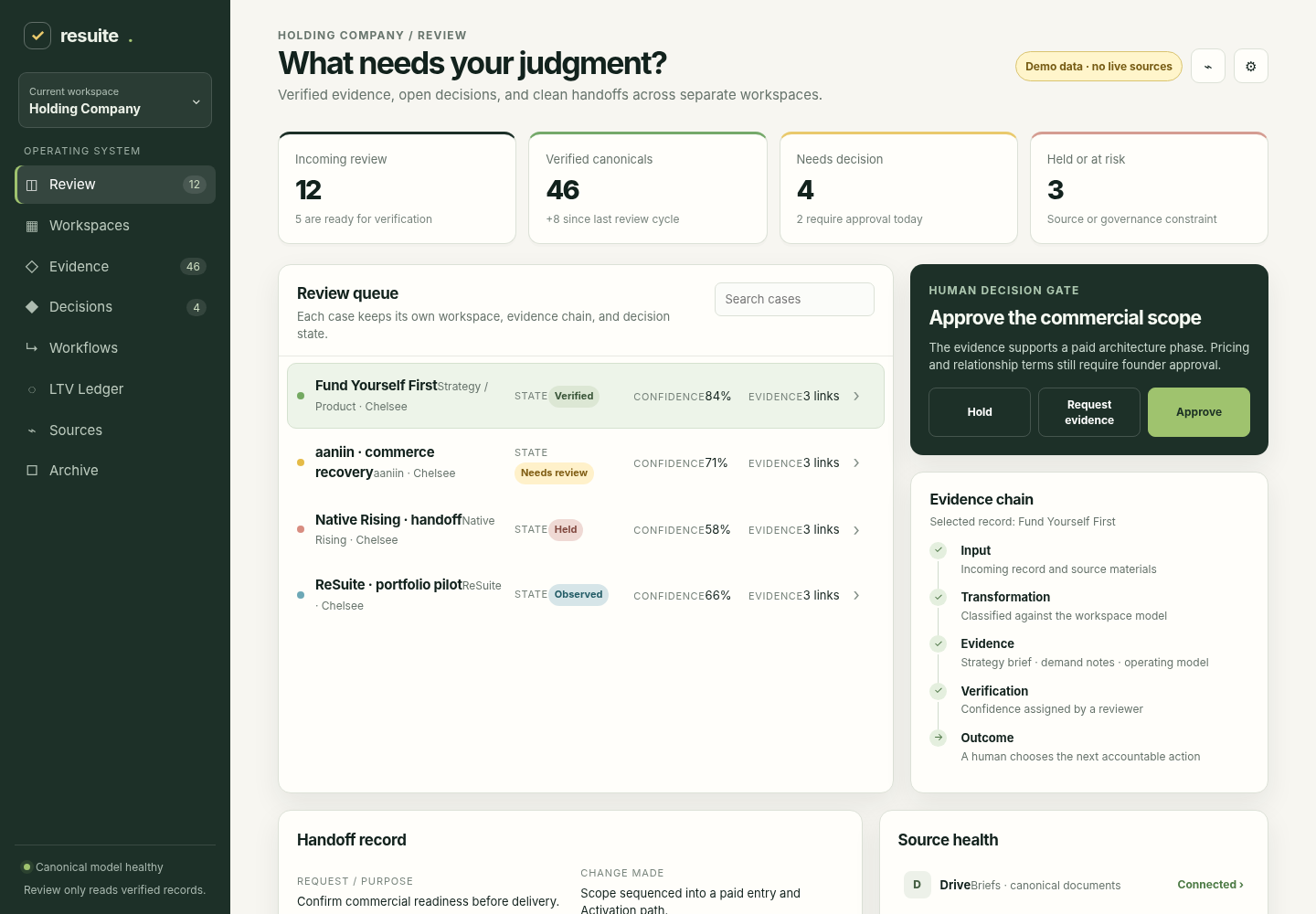
Data + project control
ReSuite Review
Evidence, decisions, workflows, handoffs and human judgment gates.
Working UIWaabi connects specialized automations across contractors, B2B customer operations, supply chain, brick-and-mortar inventory, finance, consulting, project management, loyalty, e-commerce and multimodal creative work—without forcing every business into the same software.
Small and mid-sized operators already have customers, suppliers, staff, tools, spreadsheets, storefronts and hard-won processes. The job is not to erase that. The job is to connect it so information moves once, decisions stay traceable, and people can spend more time delivering value locally.
The same business can need a customer portal, stock control, finance workflow, creative review, project approvals and supplier handoffs. Waabi treats those as one operating environment rather than six unrelated subscriptions.
Lead intake, estimate handoff, scheduling, job status, approvals, invoices and customer follow-up.
Requests, quotes, buyer status, approvals, production milestones, account history and handoff receipts.
Stock states, replenishment, inbound, sell-through, exceptions and marketing pace connected to inventory reality.
Quote, sample, production, QC, shipping, receiving and fulfillment with evidence at every transition.
Source records, runway, obligations, readiness gates, forecast context and decision trails without inventing financial certainty.
Scope, owner, blocker, decision, task, evidence, approval and next action across client delivery.
Customer or community relationships, introductions, referrals, approved offers, follow-up and reciprocity history.
Images, video, audio, documents and source evidence routed through review, editing, approval and distribution.
These are clearly labelled example workflows—not claims about a specific customer deployment. They show how the systems in the portfolio can be combined around real operating patterns.
The four visual proofs stay in the portfolio, but they no longer dominate the whole site. Their size reflects their role: control layer, private-capital proof, financial-readiness module and portfolio architecture.
Evidence, decisions, workflows, handoffs and human judgment gates.
Working UI
Founder-first runway and fundability logic.
Preview / isolated build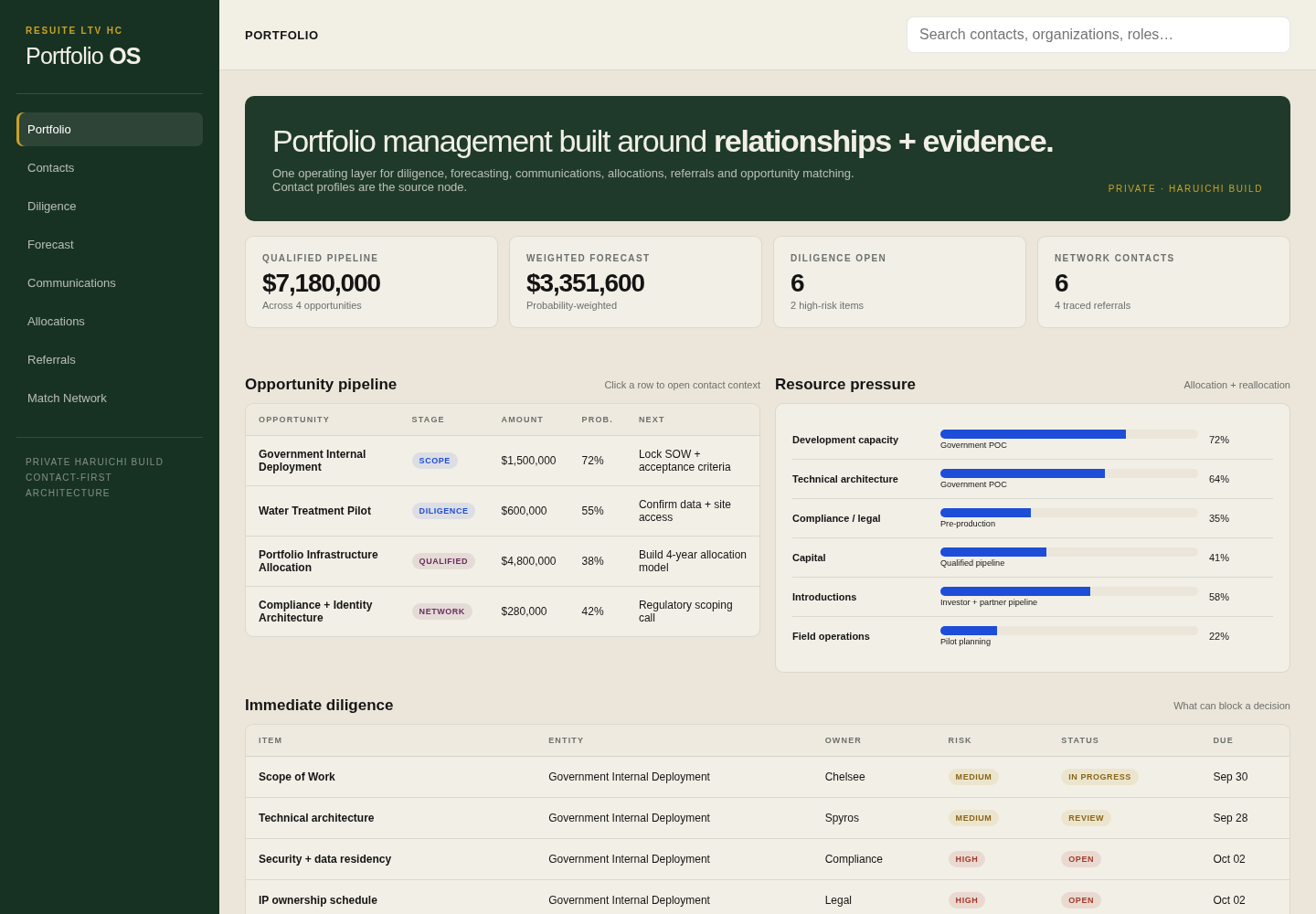
Diligence, forecast, allocations and referral context.
Staged private proof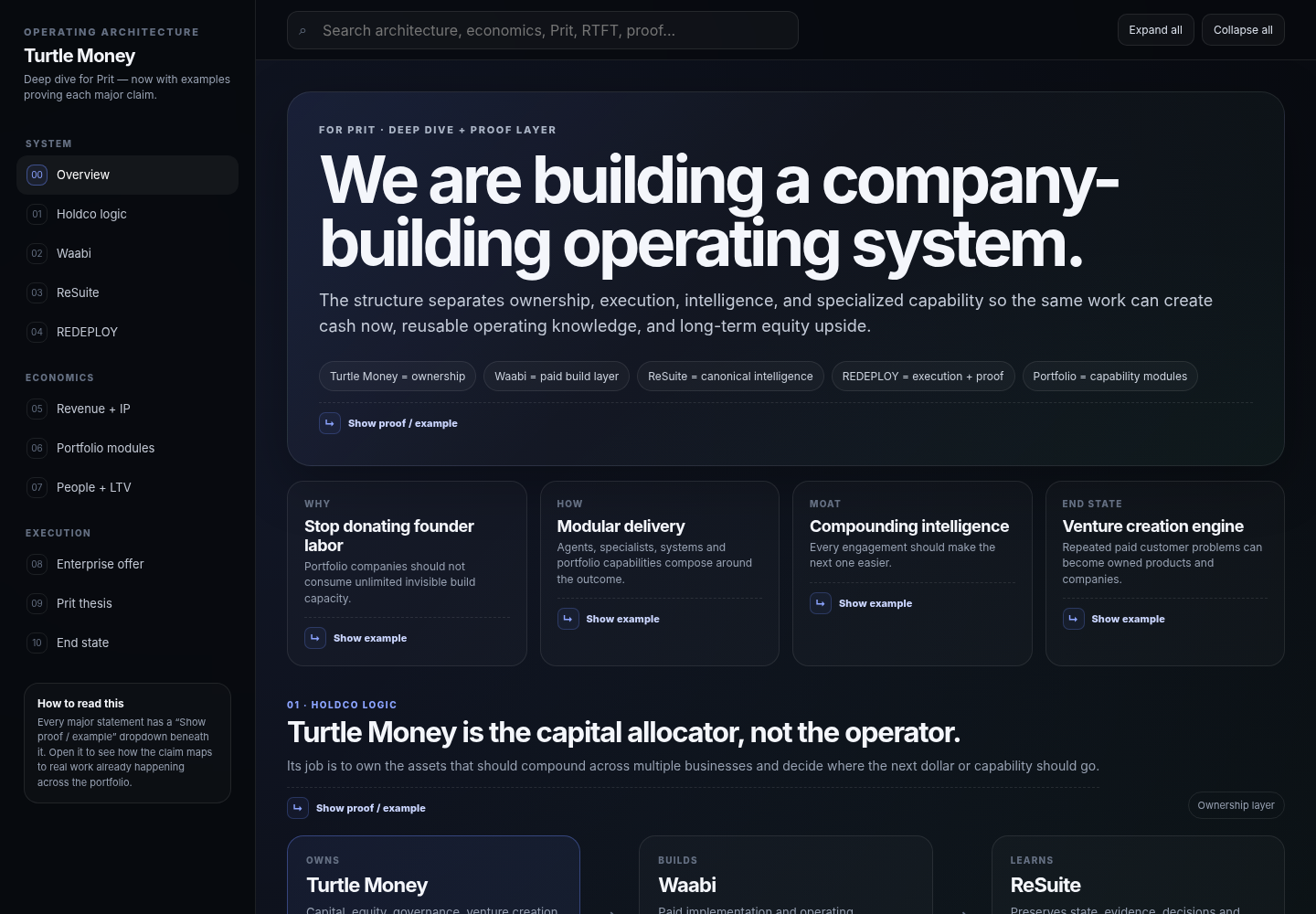
Ownership, execution, intelligence and reusable capabilities separated clearly.
Architecture proofNo founder profiles. No inflated case-study claims. Every card carries its actual build status so a working prototype is not presented as a finished production deployment.
The system starts with the smallest useful operating loop. Existing tools and proven features are preserved where they work. New automation earns more authority only after readback and evidence.
Describe the business, the repeated work, the tools already in use and where information gets lost. The first output is a scoped automation map—not a promise that everything needs AI.